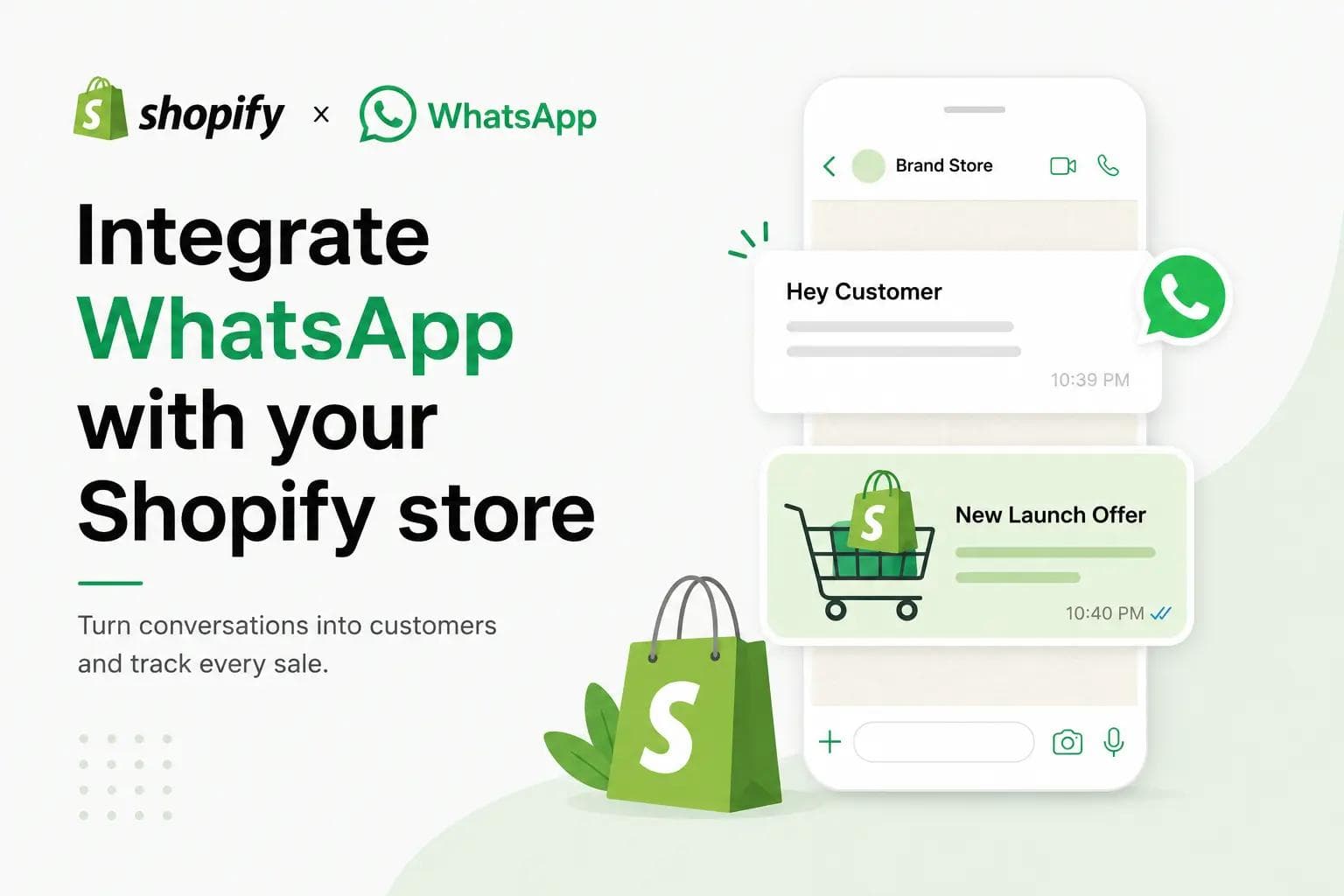
Shopify x WhatsApp: Just the Right Integration You Need for Your Business
Kenyan e-commerce is changing fast. A few years ago, with the entry of e-commerce into the Kenyan market, websites were seen as the primary way customers could shop online. So, every business owner rushed to get a site so as not to lose customers or miss out on the e-commerce wave. But today, the customer trend/preferences for online shopping looks very different.
According to a report by Communications Authority of Kenya, WhatsApp now accounts for 20.2% of online orders in Kenya, making it one of the country’s biggest shopping channels, while traditional websites account for just 12% of transactions. In short, Kenyan shoppers are discovering products online, but many are choosing to complete the sale inside WhatsApp instead.
That shift is what you may have heard being referred to as conversational commerce, where shopping happens through direct conversations between buyers and sellers instead of through a purely self-service checkout experience.
Still selling through WhatsApp but don’t have a website yet?
A Shopify store can help you showcase your products, collect payments, track orders, and turn WhatsApp conversations into real, measurable sales.
Book a Free Discovery CallWhy Kenyan Shoppers Love Buying Through WhatsApp
If you’re running a Kenyan online shop, this trend probably doesn’t surprise you. A customer goes to your website, checks out your catalog/products you have in stock, but instead of checking out immediately, they send a WhatsApp message saying: “Hi, is this available?”
Why? - Because WhatsApp feels more human, flexible, and trustworthy.
Here are some of the reasons this behavior happens:
1. Customers can talk to a real person
Unlike a website checkout, WhatsApp gives customers a chance to interact with someone directly. They can ask questions about the product or delivery, get reassurance, and feel like they’re not being scammed or ending up with a product that will not meet their needs.
2. There’s room for negotiation
This is a big one especially for Kenyan customers. They want to ask questions like:
- “Can you do delivery for free?”
- “What’s your best price?”
- “Can I buy two and get a discount?”
That conversational element makes WhatsApp feel more natural for many buyers.
3. They can ask more product questions
Customers may want clarifications on features such as sizing, ingredients, delivery timelines, color availability, and compatibility with other products. For example, a customer buying a skincare product wants to know if it will help with their acne, whether there is a product they have to avoid while using your product, and what’s the guarantee that this product is going to work. So instead of just guessing on the website, they just ask on Whatsapp.
4. Instant feedback
Chatting on WhatsApp gives buyers immediate responses, which can reduce uncertainty and help them make faster buying decisions.
5. Faster coordination for delivery
Customers can quickly share location pins, preferred delivery times, alternate contact numbers, and rider instructions which is mostly information which is left out on most website checkouts. This makes order fulfillment smoother and more reassuring for the customer.

Speed matters on WhatsApp
Customers use WhatsApp because they expect quick answers. If messages sit unanswered for too long, many buyers will simply move on to another seller. Make sure you have someone actively monitoring your WhatsApp Business inbox during business hours so product questions, payment requests, and delivery concerns get handled fast.
The Problem for Businesses: The Friction that Comes with WhatsApp back-and forth Chats
Now here’s the question every business owner should ask: Are you actually capturing these WhatsApp buyers properly? Many businesses have customers willing to buy, but the process is unnecessarily hard.
Let’s consider this common case scenario: A customer clicks a generic WhatsApp link on your website or socials and lands in your inbox with no context. Now they have to type: “Hi, is this item available?”, Then they send you screenshots of the item, Then you ask which size, Then they ask the price again, Then you ask where they’re located, Then they send payment manually, Then they send payment confirmation.
Honestly, that’s a lot of steps, even reading that must have been hectic. And every extra step creates and friction leads to abandoned sales. Compare that to this smoother journey:
Customer clicks Order on WhatsApp directly from a product page → WhatsApp opens with a pre-filled message already containing the product name → conversation starts immediately → seller sends checkout/payment link → order closes faster.
That’s a very different and smoother buying experience.
The Hidden Opportunity in WhatsApp Selling
As a business owner, you should actually be excited about this “Browse Online, Buy Offline” trend. Why? Because WhatsApp isn’t just a support channel, it can become a high-converting sales channel.
Inside a conversation, you can:
- Upsell complementary products
- Recommend bundles
- Increase average order value
- Answer objections instantly
- Build trust faster
- Close sales that may have been abandoned on a website
Let’s say a customer is buying lip balm. You can suggest: “Would you like to add a lip treatment to go with that?”. That kind of real-time upselling is much harder to do in a standard website checkout.
But WhatsApp Selling Has One Major Weakness
The biggest problem with selling through DMs is simple: Lack of analytics.
If everything happens manually in chat, you often don’t know:
- How many WhatsApp leads converted
- How many customers clicked but didn’t buy
- Which products generate the most WhatsApp inquiries
- What common objections customers have
- Where customers are dropping off
And without data, you’re just running your business blindly, which is quite risky.
Good News: Your Shopify Website Is Not Going to Waste
Some business owners get discouraged: “So I invested in a Shopify website… and customers still want to buy on WhatsApp?” Don’t panic. That’s actually not a problem, or rather it’s a problem with a solution. Your Shopify store can become the engine behind your WhatsApp selling and collect data which can be used for analytics.
Think of it this way:
- Shopify = your catalog, inventory, payments, analytics, order management
- WhatsApp = an extra sales channel just like your online store and physical store
When connected properly, they work together beautifully.
Shopify grows with commerce trends
Consumer behavior changes fast. One advantage of Shopify is that its massive app ecosystem makes it easier to respond to new trends by adding tools and integrations instead of rebuilding your entire store from scratch.
Ways to Integrate Shopify with WhatsApp
1. Add a floating WhatsApp button to your website
A floating WhatsApp button gives customers instant access to your business from anywhere on your site.
This is useful for customers who have:
- pre-purchase questions
- delivery concerns
- negotiation requests
- product clarification questions
Instead of leaving your site to search for your number, they can message you instantly.
2. Add “Order via WhatsApp” buttons on each product
This is far better than using just one general WhatsApp link.
A product-level WhatsApp button can:
- capture the exact product the customer wants,
- open WhatsApp with a pre-filled message,
- reduce customer effort, and
- speed up conversations
For example, Instead of: “Hi, is this available?”, The customer lands with:“Hi, I’d like to order the Summer Fridays Lip Balm in Vanilla.”
3. Sync your Shopify catalog with WhatsApp
This is one of the most powerful integrations. When Shopify remains your single source of truth, you can use it to manage product listings, inventory, pricing, and order records.
Customers browse and chat on WhatsApp, but the final order can still be created and tracked inside Shopify.
You can even create the order in Shopify on behalf of the customer, send them a checkout link, collect payment faster and easier, and track that sale inside Shopify. This means your data stays centralized, inventory remains accurate, and WhatsApp sales become measurable. You can also compare WhatsApp clicks, actual completed orders, and the conversion performance for WhatsApp as a sales channel. This helps you understand whether your WhatsApp channel is truly converting.
4. Recover abandoned carts through WhatsApp
Most Shopify stores rely on email for abandoned cart recovery. But let’s be honest, very few ordinary Kenyans are checking their mail. WhatsApp often gets more attention than email.
Instead of sending “You left items in your cart” via email… You can recover that customer through WhatsApp with a more personalized message.
That gives you a better chance of getting the message opened, restarting the conversation, answering any questions the customer may have, and recovering the sale. For the Kenyan market, WhatsApp Cart recovery can definitely outperform email reminders.
In Conclusion…
Kenyan shoppers are not abandoning e-commerce. They’re simply choosing a more conversational way to shop. And that’s not bad news for Shopify store owners. In fact, if set up correctly, your Shopify store can power your WhatsApp conversations, ensure faster checkouts, help with payment links, abandoned cart recovery, analytics, inventory sync, and order tracking.
So don’t worry that customers are “just browsing” your website and moving to WhatsApp. If that’s what it takes to close the sale, let them be. The smart move is not choosing between having a website or WhatsApp. It’s making them work together.
Need Help Setting Up Shopify x WhatsApp?
At Faith Shumia Labs, we help businesses build Shopify stores and WhatsApp workflows that match the way Kenyan customers actually shop, from faster checkouts and payment links to analytics, automation, and conversational selling. If you’d like help setting this up for your business, let’s talk.
Book a Free Discovery Call